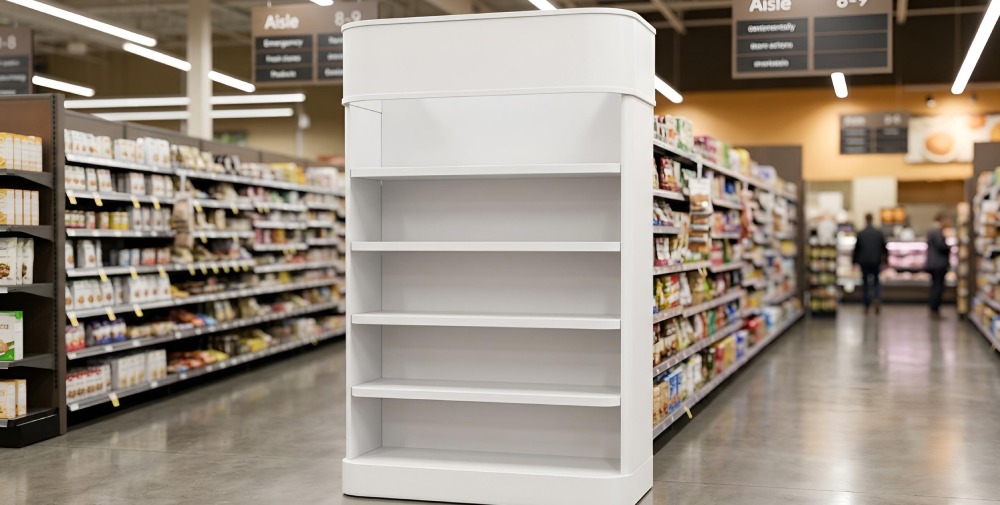
Shoppers pass hundreds of products on every trip, and the display holding those products often decides whether they stop or keep walking. A 2014 POPAI Mass Merchant Study found that 82% of purchase decisions in the mass merchant channel are made in the store, which makes the point of purchase the place where brands win or lose the sale.
Both custom and standard displays can present products well, but they serve different strategies. Custom retail displays are purpose-built around one brand’s identity and goals. Standard store displays are pre-made, fixed-size units used across many brands. The best choice is never universal. It depends on your positioning, your category, your product complexity, and the retail space you operate in.
This article compares both options, explains where each one fits, and gives you a practical framework for deciding on your next program.
Need Help Choosing the Right Store Display for Your Brand?
At FELBRO Studios, we design and manufacture custom retail displays tailored to your brand’s goals, products, and retail environment. From concept development to production and implementation, we help you create displays that capture attention and encourage purchases. Contact FELBRO Studios at 925-586-6244 to discuss your next retail display project.
What Are Custom Retail Displays?
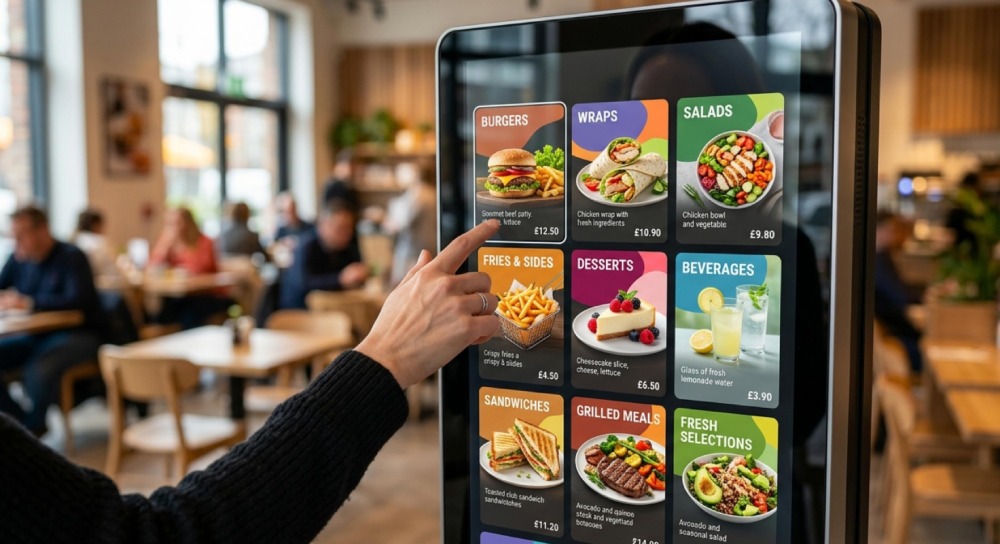
Custom store displays are fixtures engineered around a brand’s specific products and goals. They include point-of-purchase (POP) displays, floor stands, store-in-store environments, pop-up shops, retail showrooms, interactive kiosks, and custom store fixtures. Because they are built to your product dimensions, weights, and merchandising story, every element has a job.
Brand integration is where custom displays separate from the pack. Colors, logos, typography, and hero imagery can be built directly into the structure. Permanent materials such as metal, wood, plastic, and glass can be combined with print and electronics to match your brand’s look and the way shoppers handle your product.
For example, a fragrance brand might commission a custom bar with testers, mirrors, and integrated LED lighting. A footwear brand might build a modular sneaker wall with stepped platforms and adjustable shelves. A consumer electronics brand might build a demo counter with a power supply, video screens, and touch-enabled product exploration.
What Are Standard Store Displays?
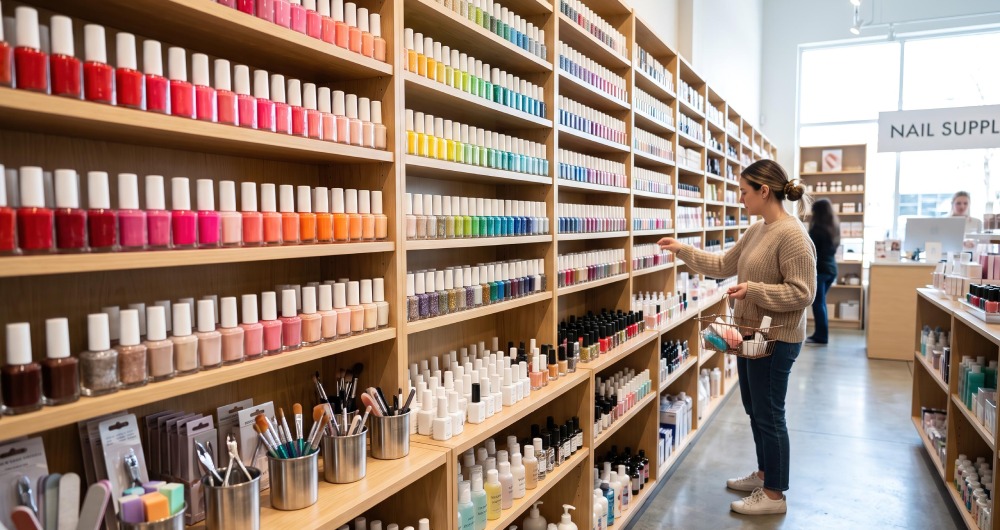
Standard store displays are pre-made and available in fixed sizes. They include gondola shelving, wire racks, dump bins, pallet displays, countertop units, and display tables. Gondolas are the most familiar example: walk into any grocery store or pharmacy, and they anchor nearly every aisle.
Standard displays are quick to source, simple to forecast, and easy for store staff to set up with basic hardware. Temporary POP units, often made of corrugated cardboard, suit short promotional runs. Countertop units near checkout handle impulse items with minimal setup.
The limitations are equally clear. When every brand in a category uses the same rack or counter unit, differentiation is hard. Standard fixtures offer fewer options for immersive experiences, integrated lighting, or interactive technology, and they can give a brand a generic look next to its competitors.
What Are the Key Differences Between Custom and Standard Store Displays?
| Comparison Factor | Custom Store Displays | Standard Store Displays |
|---|---|---|
| Design Flexibility | Tailored shapes, materials, finishes, lighting, and interactive features. | Fixed designs with limited branding options, such as headers and graphic panels. |
| Brand Identity | Creates distinctive, brand-specific retail experiences. | Maintains brand visibility through basic graphics and signage. |
| Program Scale and Lifespan | Ideal for larger programs and long-term use when designed for durability and updates. | Suitable for short-term promotions, product tests, and straightforward retail needs. |
| Production Time | Requires design, engineering, prototyping, and production, resulting in longer lead times. | Typically available more quickly from existing stock. |
| Cost Considerations | Generally requires greater upfront investment, which may be justified by reuse and brand-specific features. | Typically has a lower initial cost and fewer development expenses. |
| Installation | May require professional installation, particularly for complex structures, lighting, or electronics. | Usually easier to assemble and install using standard instructions. |
| Product Visibility and Engagement | Supports product storytelling through tailored layouts, lighting, and interactive elements. | Provides straightforward product presentation through shelving, facings, and signage. |
| Scalability and Reusability | Can scale across locations with modular designs and replaceable graphics or components. | Modular systems can be replicated across stores, with interchangeable shelves, hooks, and bins where available. |
| Best Use Cases | Product launches, flagship retail experiences, premium products, and long-term brand programs. | Routine product displays, seasonal promotions, quick rollouts, and temporary campaigns. |
Design Flexibility and Brand Identity
Custom displays give you control over structure, finishes, lighting, signage, and graphics. A holiday campaign might call for sculptural shapes, seasonal imagery, and integrated screens, none of which a standard fixture can deliver.
Standard displays allow branded headers, shelf strips, and graphic panels, but the underlying shapes and materials stay fixed. In categories where visual appeal drives choice, such as skincare, mobile accessories, and premium beverages, custom design helps a product stand apart from the products around it.
Program Scale and Lifecycle Value
Standard displays work well for short promotions and quick tests. Custom programs are designed for longer life. When a custom program is built from durable permanent materials with modular parts, replaceable graphics, and adjustable shelving, the same core structure can support multiple seasons and product assortments.
The value of a custom program shows up across its full life: how many locations it serves, how long it stays in the field, and how easily it can be updated. Custom programs fit best when a brand is producing displays at volume for many locations. For one or two units, stock fixtures are the practical choice.
Production Time and Installation
Custom displays move through design, engineering, prototyping, production, and logistics, so they need a longer lead time than stock fixtures. Complex builds with specialty materials or electronics take longer still. Installation also differs: custom fixtures with lighting or electronics may call for professional installers and coordination with store operations, while standard units rely on store staff and simple instructions.
Brands launching in fixed windows, such as back-to-school, Black Friday, or summer travel, should work backward from the in-store date and build in time for approvals and shipping.
Product Visibility and Shopper Engagement
Custom displays can spotlight hero products at eye level, use lighting to bring out texture and color, and add interactive elements that invite shoppers to engage. They guide a shopper through a curated experience instead of a passive browse.
Standard displays improve basic visibility through clean facings, logical groupings, and clear signage. For routine items that people buy on autopilot, that is often enough. High-consideration products such as electronics or premium beauty benefit from the storytelling and interactivity that custom displays offer.
Scalability and Reusability
Standard modular systems scale easily. One layout can roll out to many locations, and components such as shelving, hooks, and bins swap as assortments change.
Custom programs can scale too, and FELBRO’s Brand Programs approach is built around a modular family of displays that keeps a brand’s presence consistent across locations. Plan for shipping, storage between campaigns, and how often your branding will be refreshed, because those factors shape how long a display stays in service.
When Should Your Brand Choose Custom Retail Store Displays?
Custom displays are strategic investments best reserved for high-impact moments. Choose custom when you are:
- Launching a new product into a competitive category
- Rebranding or entering a major retailer for the first time
- Presenting a premium product where presentation is part of the perceived value
- Showcasing products that need specialized presentation, such as tiered structures for glass bottles or demo stations for smart home devices
- Building a consistent brand experience across many locations
If in-store storytelling is central to your strategy, a custom display is the strongest way to connect with your audience.
When Are Standard Store Displays the Better Choice?
Standard fixtures fit when timelines are tight, products need only straightforward shelving or counter presentation, or the retailer requires its own fixtures. They also suit temporary promotions and quick tests, such as piloting a new product in select stores before committing to a larger program.
When a retailer imposes strict fixture guidelines and standardized layouts, standard options keep you compliant. In those cases, a branded header or graphic panel can still carry your identity.
How Can You Choose the Right Store Display for Your Retail Environment?
Use this step-by-step framework:
- Define campaign goals. Decide whether your priority is awareness, product education, engagement, or immediate sales. A product demo needs interactivity that standard fixtures rarely offer.
- Understand your audience. Consider how shoppers in your category discover and choose products. High-touch items need a richer experience. Grab-and-go items need clarity.
- Define your program scale. Count the locations, the expected life of the display, and how often products or graphics will change. Volume programs with a long life are where custom design performs best.
- Check retailer requirements. Review floor space, fixture guidelines, ADA accessibility, safety standards, and co-op marketing rules. Some chains require their own standard fixtures.
- Set your timeline. Work backward from your in-store date. If a summer 2027 rollout is confirmed, start custom development early to leave room for approvals, sourcing, and shipping.
- Establish success metrics. Choose measures such as unit sales versus control stores, category share, dwell time, and shopper feedback. Test in pilot stores before scaling.
Can a Combination of Custom and Standard Displays Work Better?
Yes. A hybrid approach pairs standard frames with custom elements. Use a retailer’s existing gondolas or table fixtures as the base, then add custom headers, side panels, lighting, and interactive components. You keep the speed and familiarity of standard fixtures and gain the visual impact of custom design.
Many brands reserve fully custom displays for flagship locations and top-performing stores while deploying branded standard fixtures across the wider network. A beverage brand, for example, might place custom coolers and floor displays in its highest-volume stores and use branded shelf strips with standard coolers everywhere else. This tiered approach concentrates your effort where it has the most impact.
How Can FELBRO Studios Help You Create More Effective In-Store Displays?
At FELBRO Studios, we have designed and manufactured point-of-purchase displays since 1945. We manage every stage of the process, from research, design, and engineering to prototyping, global manufacturing, logistics, and implementation. We also analyze program results to identify opportunities for improvement and help you refine future display programs.
We manufacture displays in our own factories in the United States and China, supported by our team on the ground, allowing us to deliver custom programs worldwide. Our manufacturing capabilities cover permanent materials such as metal, wood, plastic, glass, and print, which we can combine with electronic components to meet your brand’s needs.
Our electronic integration capabilities include LED lighting, LCD media players, digital audio, HD video, Android-based systems, Windows PC kiosks, barcode scanners, and content creation. These features help us create interactive retail experiences that capture attention and engage shoppers. Our in-house design and engineering team develops display solutions, while our partners handle on-site installation, merchandising, and servicing.
Bring Your Next Retail Display Program to Life With FELBRO Studios
Whether you need custom displays for a product launch or a scalable solution for multiple retail locations, we can help you create a program that aligns with your brand identity and retail objectives. Contact our team or call 925-586-6244 to discuss your project and explore the right display solutions for your brand.
Key Takeaways
- Store displays shape how shoppers notice, understand, and choose products in any retail environment.
- Custom displays deliver brand storytelling and differentiation. Standard displays deliver speed and simplicity.
- The right choice depends on your brand identity, campaign goals, program scale, timeline, and retailer requirements.
- Many brands combine both: standard fixtures for everyday merchandising and custom displays for launches, key accounts, and flagship locations.
- A clear decision process, with defined goals, audience, scale, and success metrics, makes your retail display results measurable.
Frequently Asked Questions
When do custom store displays make sense for a brand?
Custom displays deliver the most when they support a major launch, a premium product, or a program that runs across many locations where differentiation and consistency matter. Brands that pilot a custom program in a test retail environment and compare results against standard fixtures can build a clear case for broader rollout. Modular custom units designed for reuse across campaigns give a brand a lasting presence while keeping the program flexible.
Are standard retail displays suitable for premium brands?
They can be, with the right finishes and graphics. A standard shelving unit paired with high-quality signage and well-chosen props can look far more polished than a bare rack. For flagship or key account locations, premium brands often pair standard fixtures with select custom elements, such as branded risers, lighting upgrades, or curated graphic panels, to keep an upscale feel.
How long does it take to produce a custom store display?
Timelines depend on the complexity of the design, the materials, any electronics, and where the program is produced and shipped. A custom program moves through design, engineering, prototyping, production, and logistics, so it should be planned well ahead of your in-store date. Share your target date with the FELBRO team early so the schedule can be mapped to your program.
Can custom store displays be reused for multiple campaigns?
Yes, when they are planned for reuse from the start. Modular frames with standardized hardware let you swap graphics, headers, and shelf configurations between campaigns. Durable core structures and neutral base finishes support multiple product assortments and seasonal stories. Raise reuse in the initial brief so the structure and branding decisions support long-term flexibility.
What should brands measure to evaluate store display performance?
Start with sales versus control stores, units per transaction, and category share. Where possible, track engagement, such as dwell time, product interactions, and use of digital components. Add store manager feedback and shopper observations, which often explain why a display works, not just whether it does, and help refine future designs and deployment.